



Neurodiversity at Work Briefing
This interactive 2.5-hour briefing gives People & Culture, HR, DEI and organisational leaders a clear understanding of neurodiversity at work and what neuroinclusive organisational practice looks like.
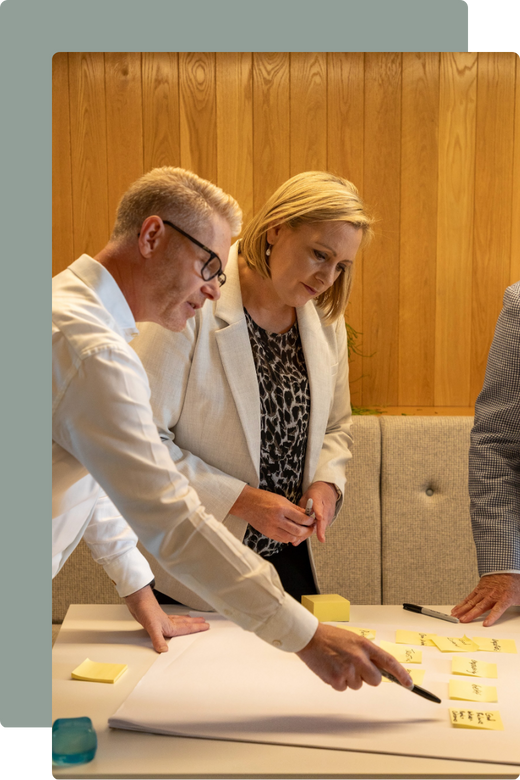
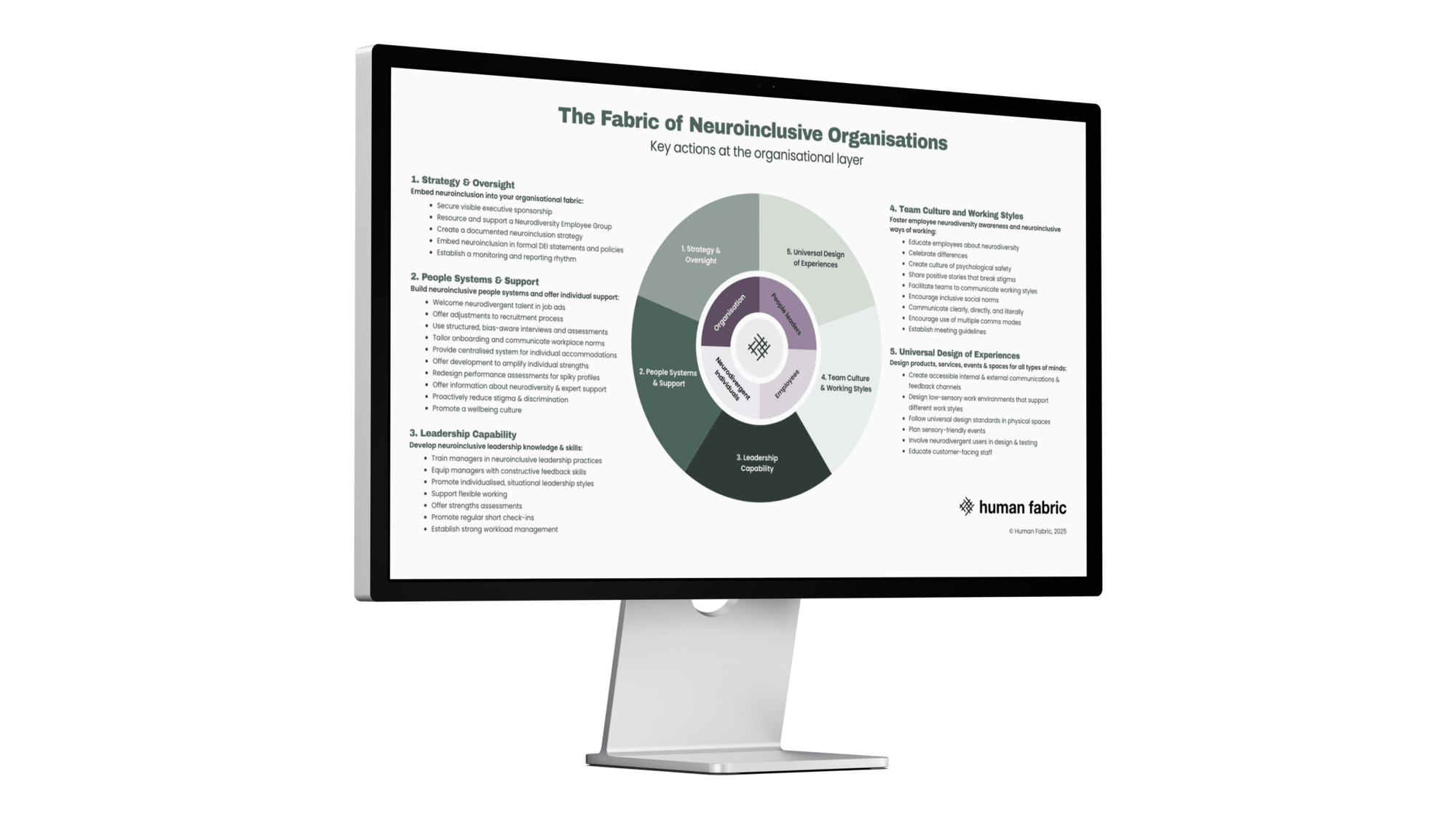
The session combines presentation and examples with facilitated discussion about your current policies, people systems, leadership practices and culture. It includes a comprehensive resource with advice for organisations.
Online or in-person at your organisation.
Why this briefing matters
One in five people are neurodivergent - they think, feel, sense, and process information differently than neurotypical brains. Although they may not be talking openly about their differences in your workplace - at least not yet - neurodivergent people are likely already part of your teams.
They have exceptional strengths and offer cognitive diversity to teams - which is increasingly important to solve today's more complex problems.
Yet most workplaces are not designed with them in mind. Many talented employees with ADHD, autism, dyslexia, dyspraxia and other forms of neurodivergence face invisible barriers to doing their best work – not because of lack of ability, but because of systems, environments, and norms that were never built for different ways of thinking.
Neurodiversity is now firmly on the Diversity, Equity, & Inclusion agenda – and business leaders are beginning to realise that neuroinclusive practices aren’t just the right thing to do - they deliver measurable business benefits.

The opportunity from more neuroinclusive organisations
This briefing helps you understand the strategic actions your organisation could take, in order to realise the many benefits of neurodiversity in the workforce:
Greater Innovation and Creative Thinking
Neurodiverse teams bring together unique perspectives that challenge conventional thinking and drive breakthrough ideas.
More Inclusive, Adaptive Leadership
Leading neurodiverse teams builds stronger people leaders - enhancing communication, empathy, and strengths-based management across the board.
Higher Engagement, Retention, and Wellbeing
Inclusive cultures reduce burnout and turnover while increasing job satisfaction and psychological safety for all employees.
Enhanced Team Collaboration and Culture
Neuroinclusive practices promote clearer communication, tailored collaboration, and respectful team dynamics - lifting overall team performance.
Improved Productivity and Performance
Studies show teams that include neurodivergent talent can outperform others - reporting up to 30% gains in productivity and quality.
Access to Untapped Talent and Future-Ready Skills
Neurodivergent individuals often excel in areas like problem-solving, pattern recognition, and innovative thinking - skills in demand for the future of work.
Stronger Employer Brand and DEI Impact
Demonstrating genuine inclusion enhances your reputation, attracts top talent, and positions your organisation as a DEI leader.
Better Customer Experiences and Market Reach
Designing for neurodivergent customers improves accessibility and usability for everyone, expanding your market and improving customer satisfaction.

The briefing covers:
Neurodiversity at work
Key concepts, language, prevalence and why neurodiversity has become increasingly visible.
Employee strengths and workplace barriers
How different minds may experience communication, sensory environments, executive-function demands, workplace systems and cultural norms.
Why neuroinclusion matters
The ethical, commercial and future-focused case, including implications for engagement, wellbeing, retention, innovation and organisational performance.
What good practice looks like
Practical guidance across:
- sponsorship, policy, and improvement plans
- employee awareness and culture
- workplace adjustments and individual support
- leadership capability
- inclusive team practices and communication
- recruitment, onboarding and career development
- accessible environments and events
- employee networks and lived-experience input
Your organisational priorities
Facilitated discussion helps identify current strengths, likely gaps and the practical next steps most relevant to your context.
Participants gain:
- clarity on the role of HR and organisational leaders in creating a neuroinclusive workplace
- a practical view of the strengths, risks and opportunities created by embracing neurodiversity at work
- practical ideas and examples that can be applied to current policies, systems and initiatives
- greater confidence discussing neurodiversity and identifying improvements
- shared priorities for further action

What you will receive
- a 2.5-hour facilitated briefing, online or in person
- minor tailoring to your organisational context
- draft internal communications to invite participants
- facilitated questions and discussion
- a comprehensive Neurodiversity in the Workplace reference guide, providing practical advice on neuroinclusive organisational practices
The reference guide gives the HR team a detailed resource they can return to after the session, covering key concepts, common workplace barriers and practical organisational actions.

Lead Facilitator
Jenny Turner, MBA, B.Sc. Hons
Jenny is an experienced business leader, leadership coach, neurodiversity coach and consultant. She is an engaging and energetic presenter, and a responsive facilitator of modern adult learning. Jenny brings a blend of coaching techniques and insightful advice for participants. She weaves in her own experiences as an ADHD professional throughout her successful career.
For larger sessions, Jenny is supported by Rosie Hixon.
Here's what our clients have said:

John Ray, Diversity & Inclusion Lead - Hato Hone St John
"Having Jenny come along to speak is a golden key to getting your people engaged in the topic of neurodiversity. The information is well researched, presented in an engaging way and can be amended to suit your particular situation. You stand out from all the other Neurodiversity consultants we have worked with due to your professional yet down-to-earth approach to supporting organisation do better. Thanks Jenny!"

Yuliya Schamrel, People & Culture Lead - Morphum Environmental
"Reframing and Harnessing Neurodiversity in Teams’ is a valuable workshop to attend for managers, HR teams, parents, neurodivergent employees, and coworkers of neurodivergent employees. In short, it’s beneficial for everyone who is passionate about creating spaces where our differences are acknowledged as strengths and harnessed for innovation and enhanced personal, team, and organisational performance. Informative and practical, this workshop creates awareness about neurodiversity at the workplace and supports the participants in planning the first steps to neuroinclusion they can take."