Skip to content
The Neurodiversity at Work Accreditation Logo

Neurodiversity at Work Accreditation

Understand where you are now and what to prioritise next

Many organisations have begun their neuroinclusion journey through awareness sessions, employee networks, flexible working or ad hoc support for individual employees.

These are valuable foundations. But organisations can still struggle to:

  • turn good intentions into a consistent experience across teams and leaders
  • identify the hidden barriers affecting performance, wellbeing and retention
  • give managers clear, practical guidance on how to support different needs
  • connect separate initiatives into a coherent organisation-wide approach
  • focus time and resources on the changes that will have the greatest impact
  • demonstrate progress to leaders, employees and external stakeholders.

Human Fabric’s Neurodiversity at Work Accreditation helps organisations become neuroinclusive and attract the best diverse talent through a clear, coordinated and evidence-informed approach.

It is a structured assessment, strategy development, and recognition programme for organisations committed to creating workplaces where all types of minds can thrive.

By independently reviewing organisational evidence, employee experience insights, and key stakeholder perspectives the accreditation process gives you a clear view of what is working, what needs to improve, and what to do next.

Independent assessment. Practical strategy. Credible recognition.

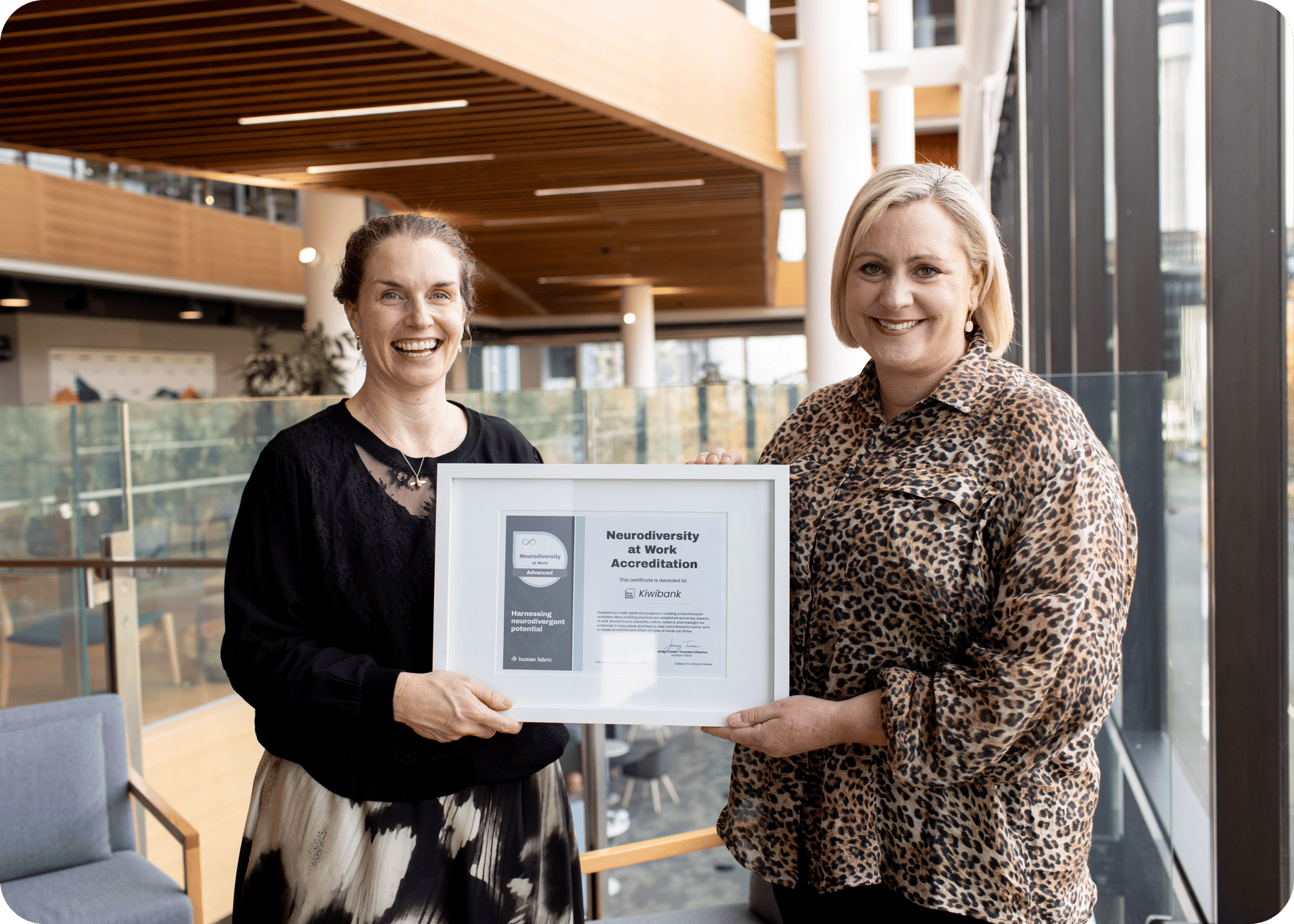
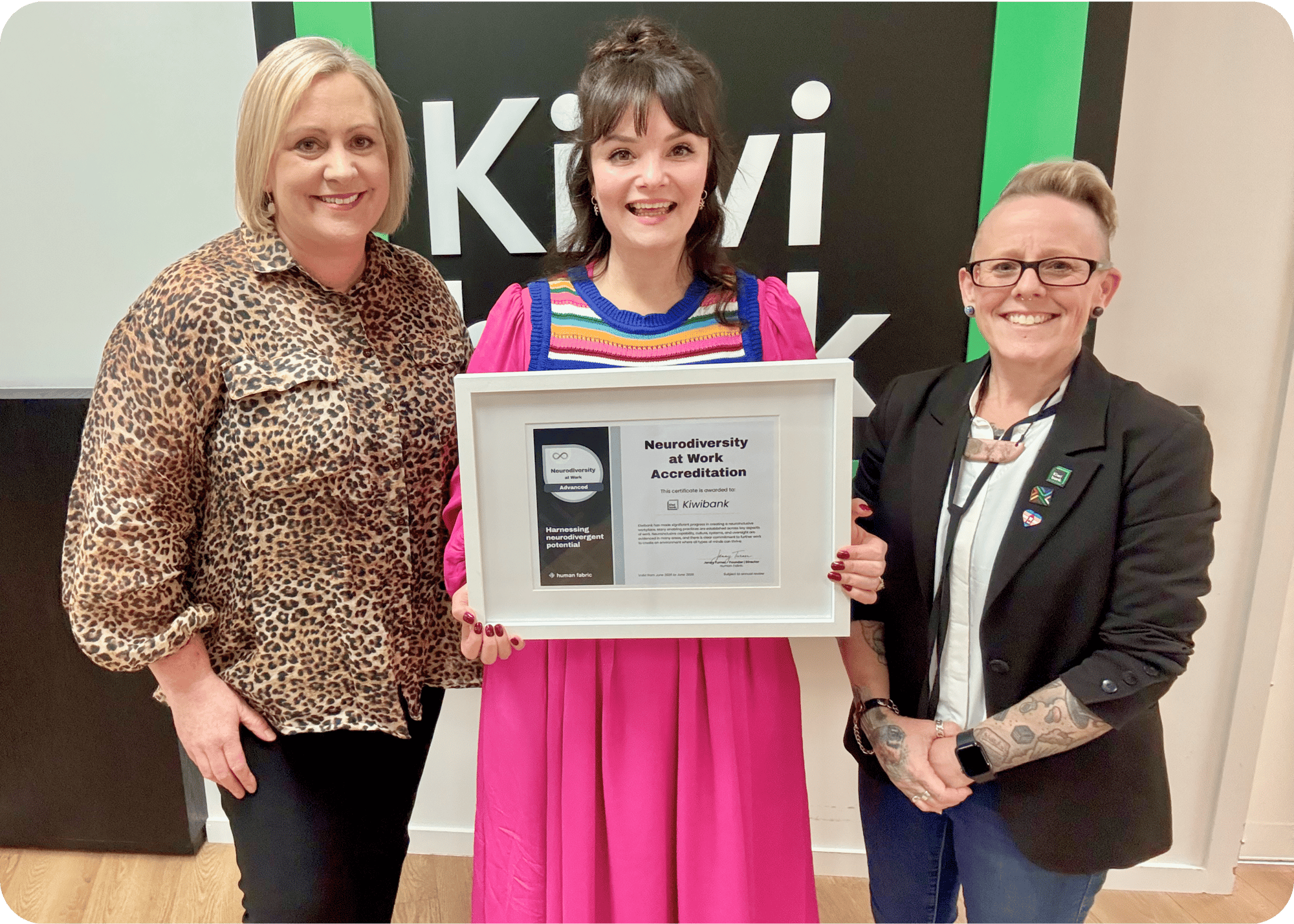
Charlotte Ward and Jenny Turner holding the Kiwibank Neurodiversity at Work Certificate

“We knew that we wanted to progress the action in a really structured way. One of the great things about the accreditation is that it does exactly that.”

Charlotte Ward, Chief People & Culture Officer, Kiwibank

Insight. Action. Recognition.

Insight

Receive an independent view of your organisation’s neuroinclusion strengths, inconsistencies, and opportunities across the employee experience.

Action

Receive a tailored three-year Neuroinclusion Strategy with clear goals, success measures, prioritised initiatives, and support to implement it. 

Recognition

Gain independent accreditation at the level that reflects your organisation’s current progress, recognising the foundations already in place and your commitment to continued improvement.

“It was incredibly affirming to have the work of those who had gone before recognised and captured through the audit process. It has also given us a clearer view of where we are now, where we want to go next and how we can keep evolving.”

Dee Johnston, Head of People Experience, Engineering New Zealand


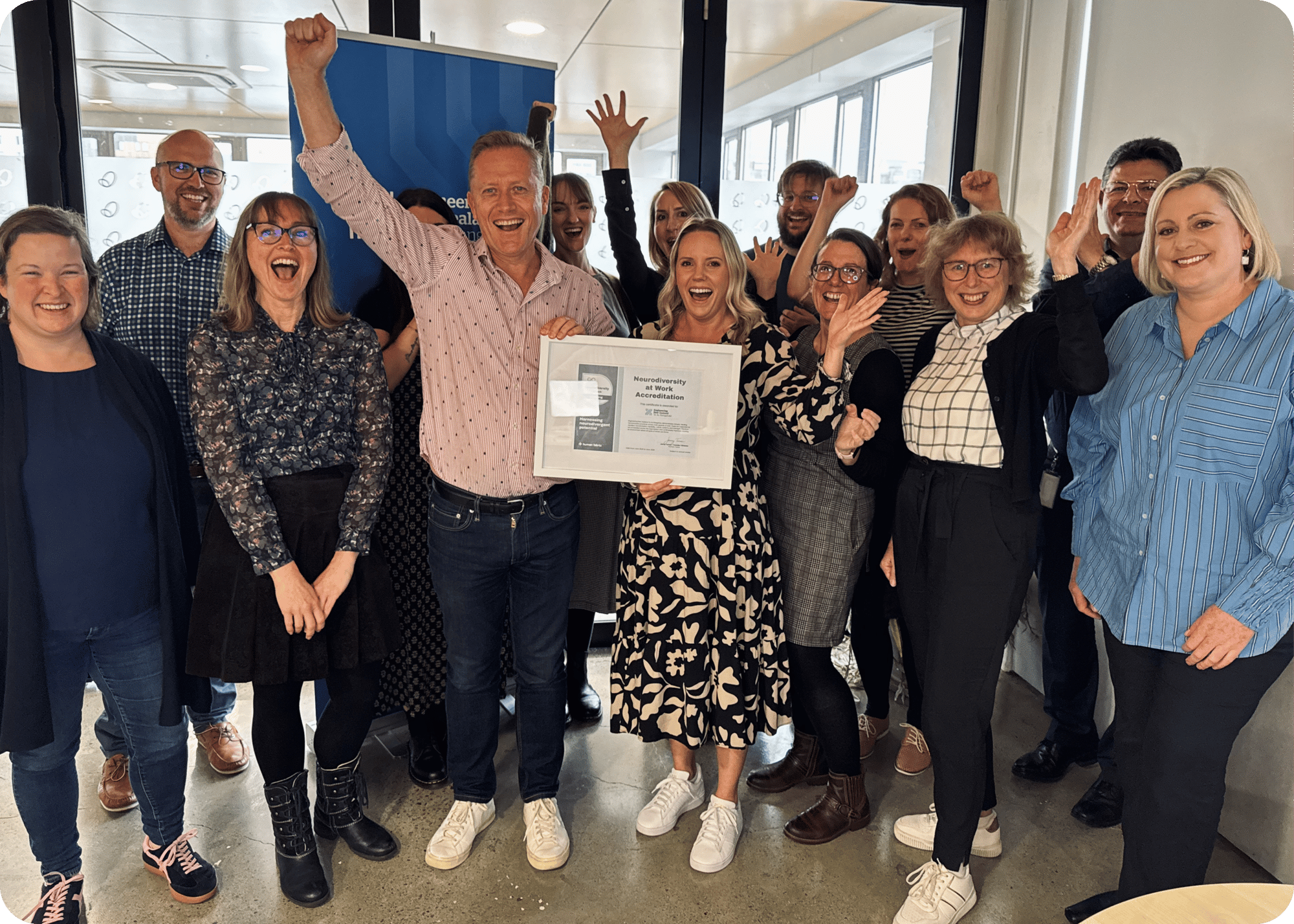
A group from Engineering New Zealand holding the Neurodiversity at Work Certificate
Two people talking on chairs in an office setting

“The accreditation holds you to a standard. It tells you what you are doing really well, but it also gives you important feedback through a clear and consistent process about what you need to do better.”

Charlotte Ward, Chief People & Culture Officer, Kiwibank

More than just a badge

The badge recognises your progress. But the greatest value comes from the insight, alignment, and direction created through the assessment. The accreditation helps you answer five practical questions:

What are we already doing well?

Recognise the people, systems, and practices that are helping different minds contribute to their full potential.

Where are people still experiencing unnecessary barriers?

Identify friction within leadership, communication, recruitment, support pathways, work design, technology, and the physical environment.

How consistent is the employee experience?

Understand whether good practice is embedded across the organisation or still depends on individual managers, teams, or locations.

What should we prioritise?

Focus leadership attention and organisational resources on the actions likely to make the greatest difference.

How will we know whether things are improving?

Establish meaningful goals and success measures to support accountability and future decision-making.

Why neuroinclusion matters

Help people thrive at work and create a high-performing organisation

Neurodiversity is the natural variation in how people think, learn, process, communicate, and experience the world.

Around 15–20% of people are likely to be neurodivergent in some way. Many do not have a formal diagnosis, and many do not feel safe or comfortable disclosing their neurodivergence at work.

Neurodivergent people may bring valuable strengths such as analytical thinking, creativity, empathy, pattern recognition, attention to detail, deep focus, problem-solving, systems thinking, and the ability to challenge assumptions.

Those strengths can be underused when workplaces are designed around a narrow idea of how people should communicate, learn, work or progress.

Neuroinclusion helps remove this avoidable friction. It can support:

  • stronger and more sustainable performance
  • improved employee wellbeing and engagement
  • better team collaboration and productivity
  • more inclusive leadership
  • clearer communication
  • greater innovation and cognitive diversity
  • talent attraction and retention
  • reduced people, employment, and reputational risk.
Richard Templer, CEO of Engineering New Zealand

“We want to create environments in which talented people can flourish, grow and lead. By becoming more neuroinclusive, we can increase our talent pool and get the best out of the talented people we already have.”

Richard Templer, Chief Executive Officer, Engineering New Zealand


A whole-of-organisation view of neuroinclusion

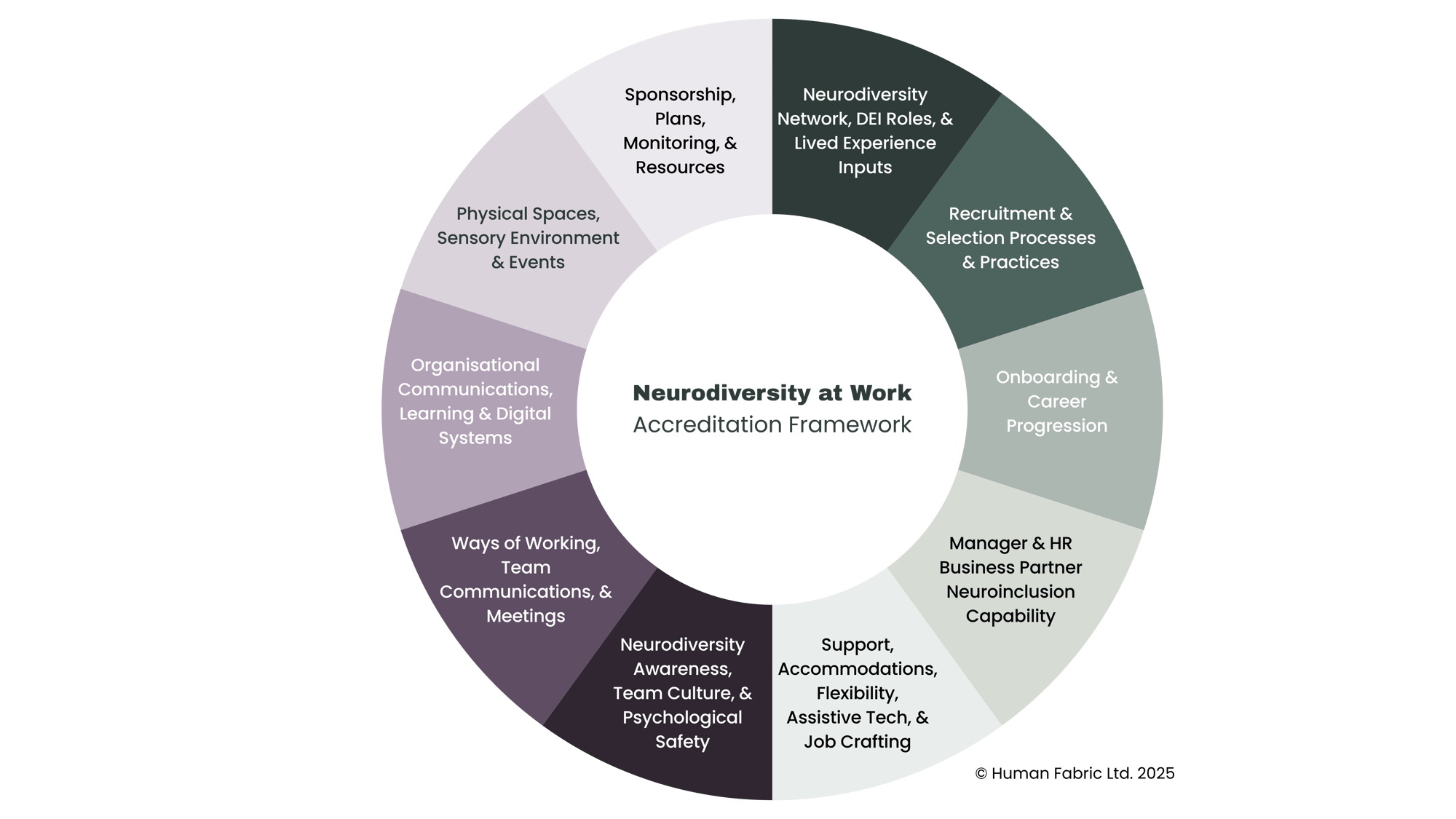
Our neuroinclusion assessment framework was informed by research on the emerging best practice and academic evidence globally. The assessment focuses on ten areas that impact employee experience and performance, shown in the diagram.

Ratings are used in the assessment to reflect the extent to which current practice in each area is aligned with neuroinclusion leading practice. Each area receives one of five ratings:

Significant gap · Early progress · Partially aligned · Mostly aligned · Leading practice

Neurodiversity at Work Accreditation Framework showing ten aspects that are reviewed

How the process works

A virtual and collaborative approach

1. Discovery and planning

We learn about your organisation, what is already in place, and what you want to achieve. The kick-off confirms the scope, stakeholders, evidence requirements, timetable, and internal communications.

2. Evidence and employee insight

Human Fabric reviews relevant organisational documents, employee data, and available insights. Where useful, an optional Neuroinclusion Survey can be deployed to gain valuable information on employee and manager experiences.

3. Collaborative workshops

We facilitate a tailored series of structured workshops with the people best placed to describe current practice and employee experience. Workshops can be held online over two to three weeks or in person over one or two days. Sessions typically range from 30 minutes to two hours and are tailored to the organisation’s size, structure, and available evidence.

4. Independent assessment and strategy

Human Fabric evaluates the full body of evidence against the Neurodiversity at Work Framework. We then develop the findings, ratings, recommendations, accreditation outcome, and a tailored three-year Neuroinclusion Strategy.

5. Presentation and accreditation

We present the findings, recommendations, and priorities to your key stakeholder group. The accreditation level is confirmed and the certificate and communication resources are provided.

A typical assessment takes four to eight weeks, depending on organisational size, complexity, evidence availability, and stakeholder scheduling.

“The process was super robust. It involved a broad range of people from across the business, allowing us to compare the work we thought we were doing with the reality of people living it every day.”

Hayley Beattie, Diversity, Equity and Inclusion Lead, Kiwibank


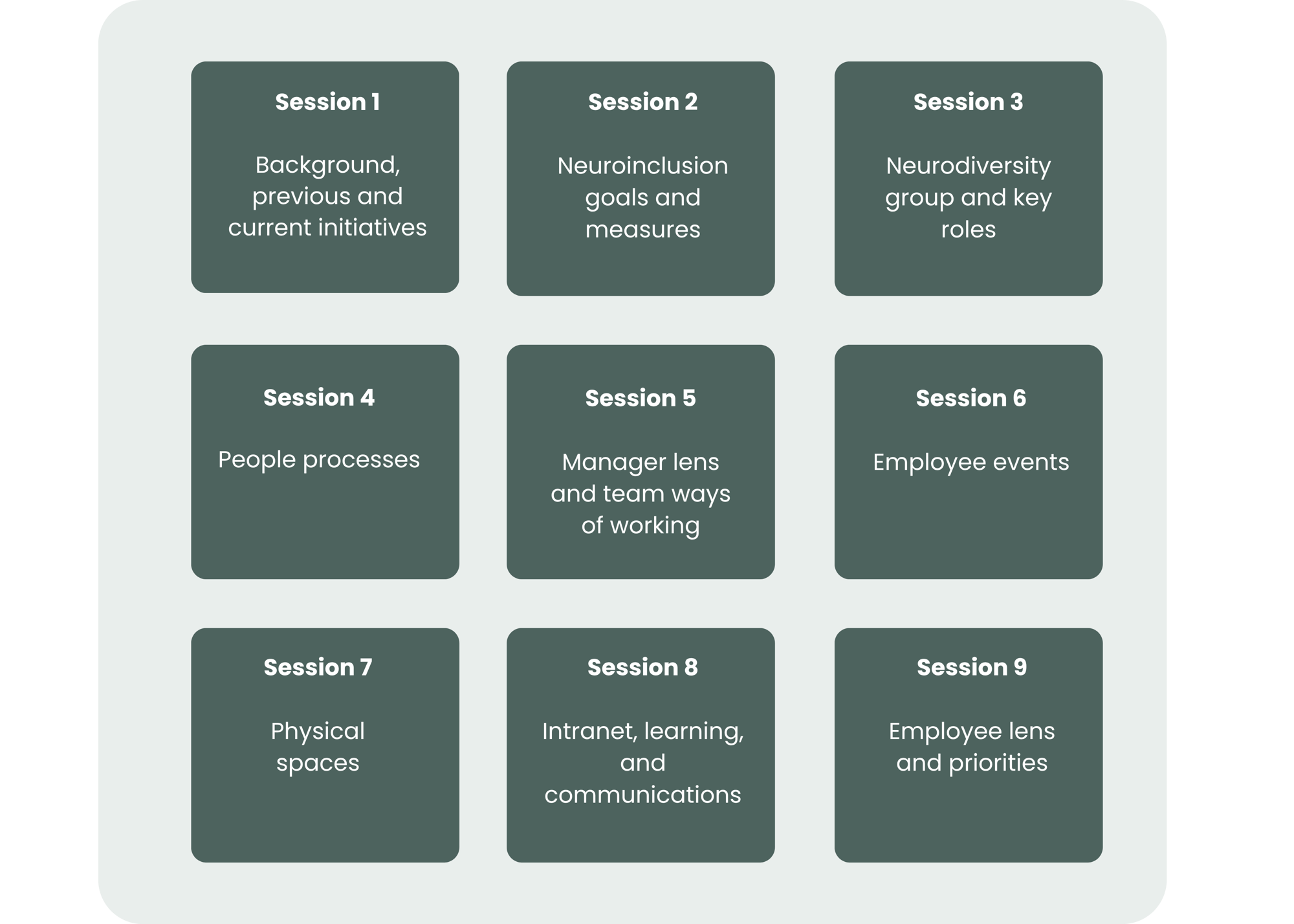
Graphic showing the ten typical sessions in the Neurodiversity at Work Accreditation
Jenny Turner and Kiwibank staff holding the Neurodiversity at Work Accreditation certificate

Optional Neuroinclusion Survey

An employee survey is not automatically required. Existing engagement data or employee surveys may provide sufficient evidence. A shorter pulse survey may also be used to fill specific gaps.

Where further insight is needed, Human Fabric can tailor and deploy an anonymous Neuroinclusion Survey.

This may include:

  • survey design and setup
  • employee communication templates
  • deployment support
  • quantitative and qualitative analysis
  • a summary of findings and key themes
  • integration of survey insights into the assessment and strategy.

Human Fabric will first review the employee experience information already available and recommend the most useful and proportionate approach.


“We got lots of different perspectives. That meant we could be confident that the action we take going forward was well informed by both our people and external leading practice.”

Charlotte Ward, Chief People & Culture Officer, Kiwibank


Accreditation levels

The tiered model recognises what your organisation has already achieved in pursuit of neuroinclusion while providing a clear pathway for continued improvement. 

Accreditation Committed Logo
Accreditation Advanced Logo
Accreditation Leading Logo

Committed

The organisation has demonstrated strong commitment to creating a neuroinclusive workplace.

Solid foundations are in place, including executive sponsorship, clear goals, and a prioritised roadmap for action. Neurodiversity awareness and neuroinclusive practices are under development, and there is work being done towards creating an environment where all types of minds can thrive.

Advanced

The organisation has made significant progress in creating a neuroinclusive workplace.

Many enabling practices are established across key aspects of work. Neuroinclusive capability, culture, systems, and oversight are evidenced in many areas, and there is clear commitment to further work to create an environment where all types of minds can thrive.

Leading

The organisation demonstrates industry-leading neuroinclusive practices across most aspects of work.

These are supported by excellent neuroinclusive capability, culture, systems, and oversight. Practices are embedded across the organisation and continuously improved, creating an environment where all types of minds can thrive.

Accreditation recognises the organisation’s systems, culture, practices, and demonstrated commitment at the time of assessment. It does not mean every employee will have the same experience or that individual issues will never occur.

“This accreditation reflects the progress we’ve made in creating a more neuroinclusive workplace—one where different ways of thinking, communicating, processing information and solving problems are better understood, valued and supported. It shows we’re on the right path, but there’s more to do.” Kiwibank Accreditation Announcement, 2026


Two people walking in a New Zealand workplace setting

What you will receive with the Neurodiversity at Work Accreditation

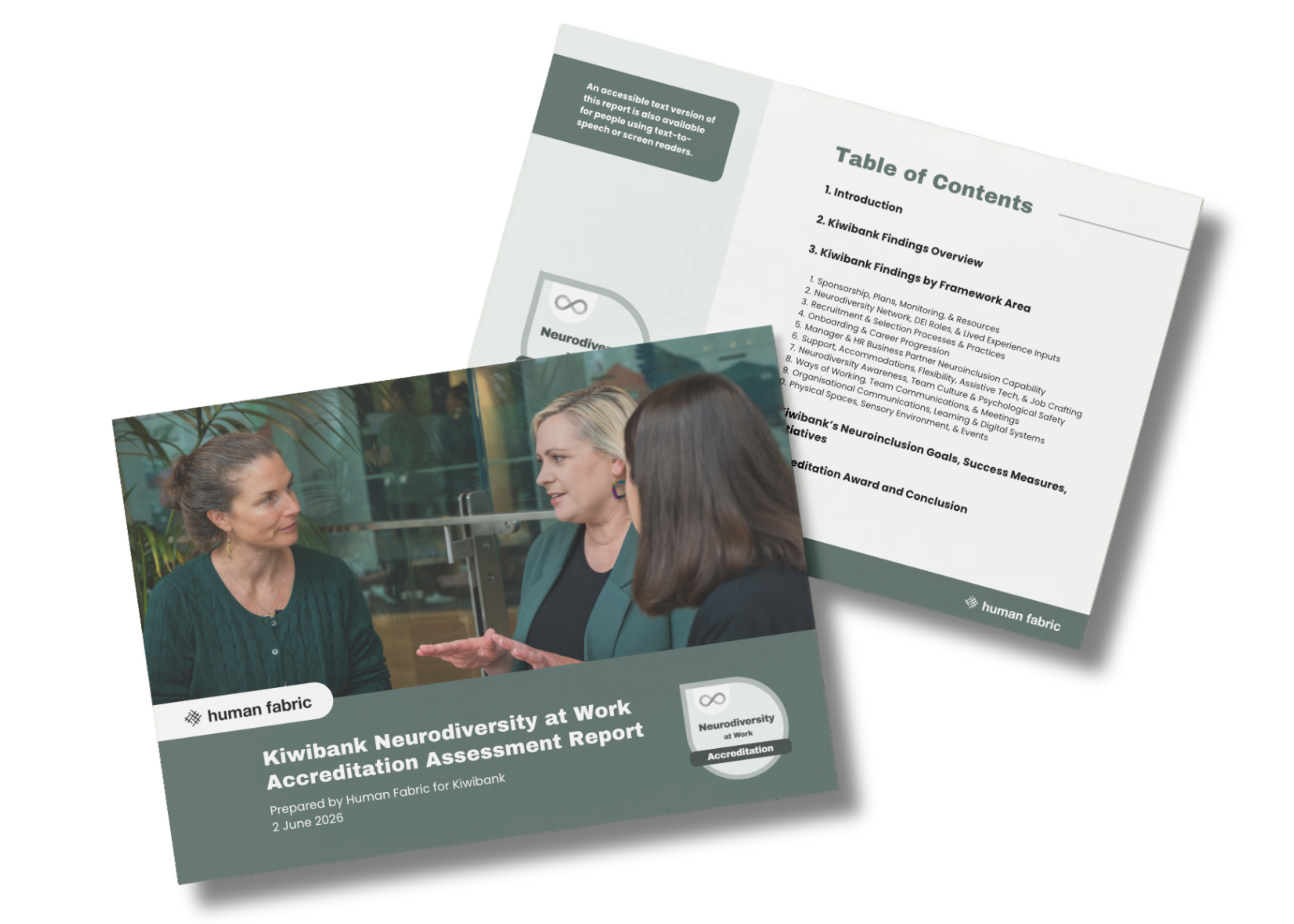
The Neurodiversity at Work Assessment Report

Comprehensive Neuroinclusion Assessment Report

A detailed report setting out:

  • the assessment approach
  • current strengths and evidence-informed findings
  • areas for improvement
  • organisation-specific recommendations
  • ratings across all ten framework areas
  • a visual summary of findings
  • your accreditation outcome.
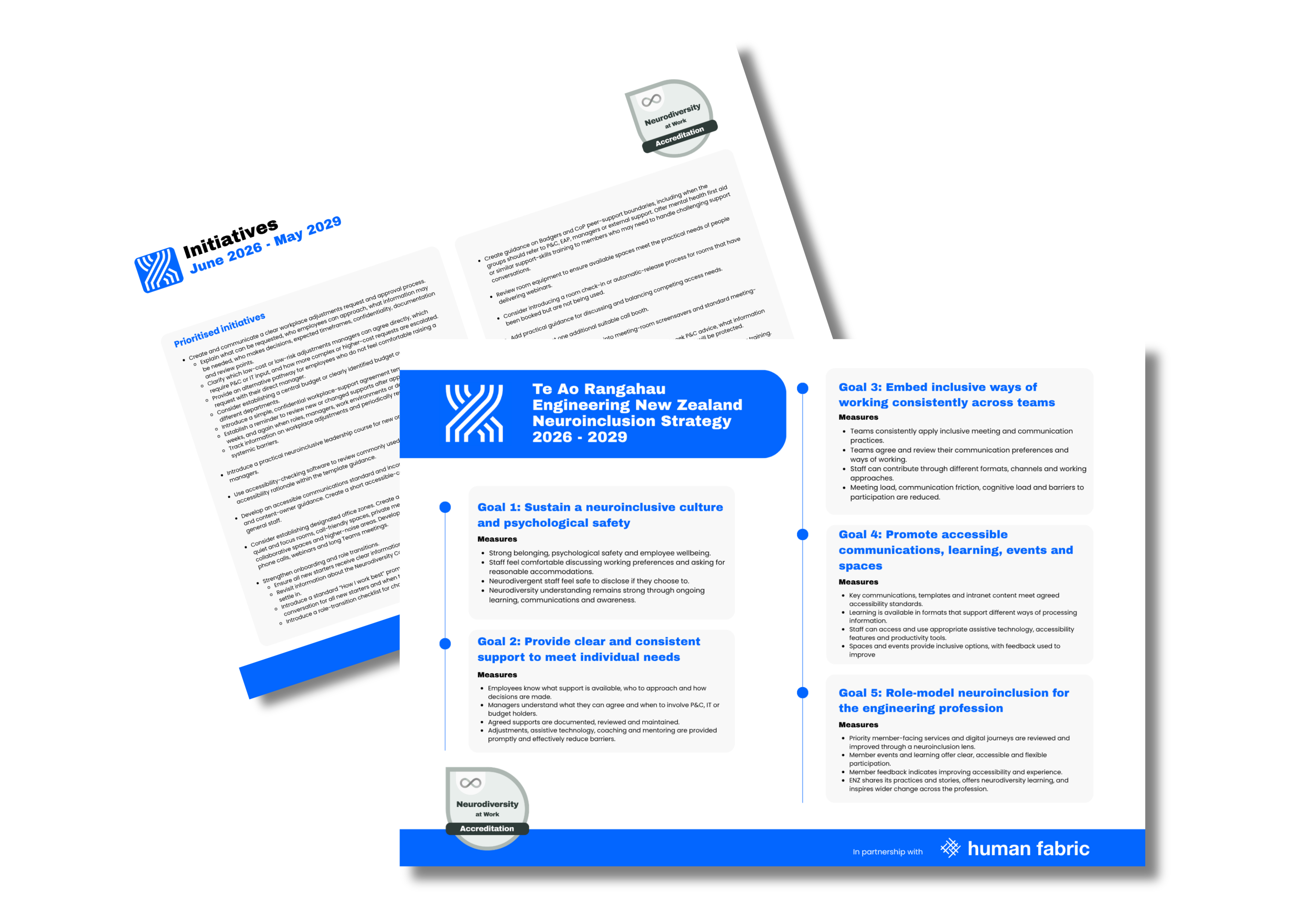
An example of the Neuroinclusion Strategy and Plan

Tailored Neuroinclusion Strategy and Plan

A practical three-year strategy including:
  • clear organisational goals for neuroinclusion
  • success measures to monitor
  • prioritised initiatives, sequenced over three years
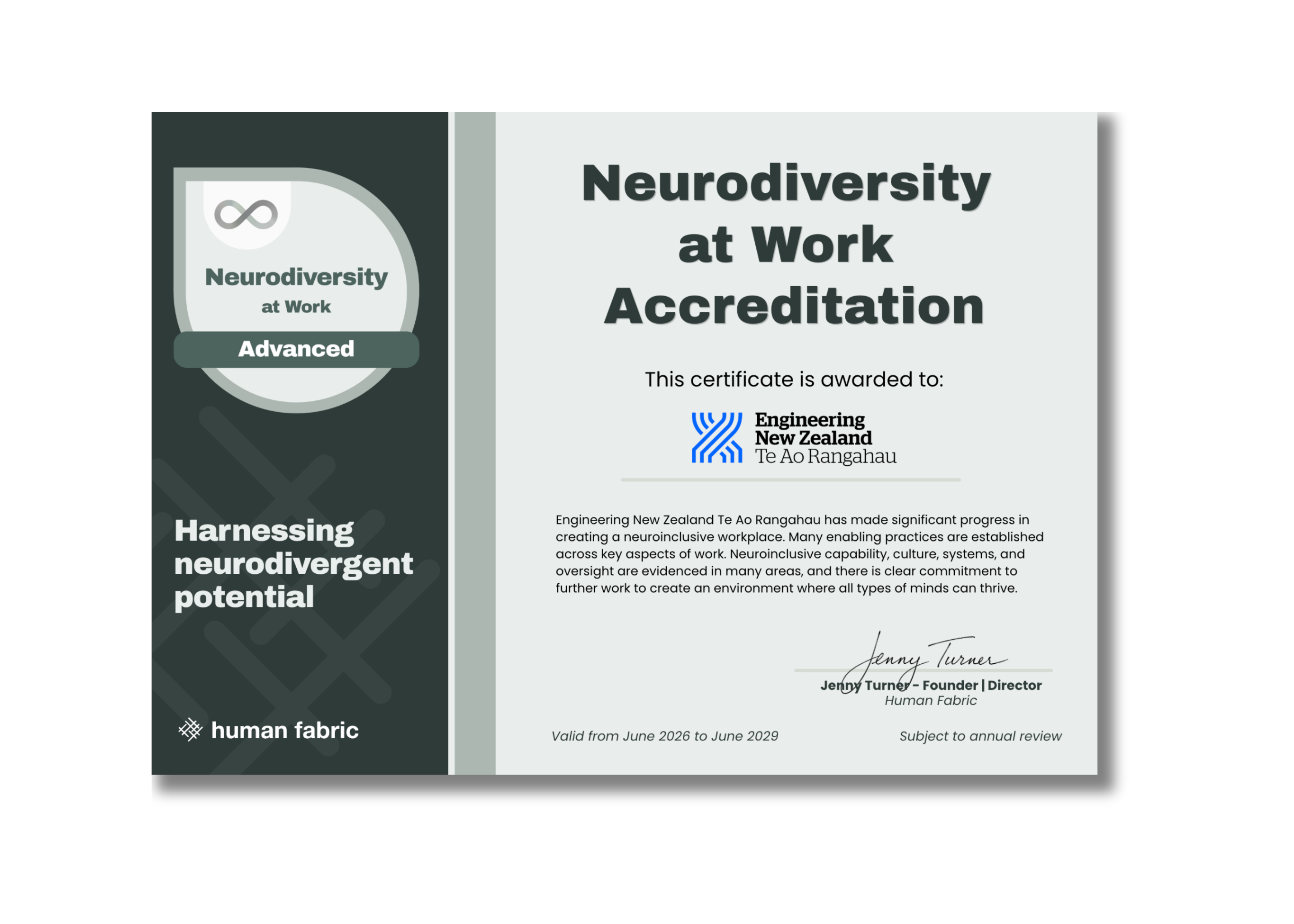
The Neurodiversity at Work Certificate

Accreditation and communications support

  • Presentation of findings
  • Framed and digital accreditation certificate
  • Digital badge suite
  • Employee information pack
  • Support with programme-launch communications
  • Support with accreditation-announcement wording.
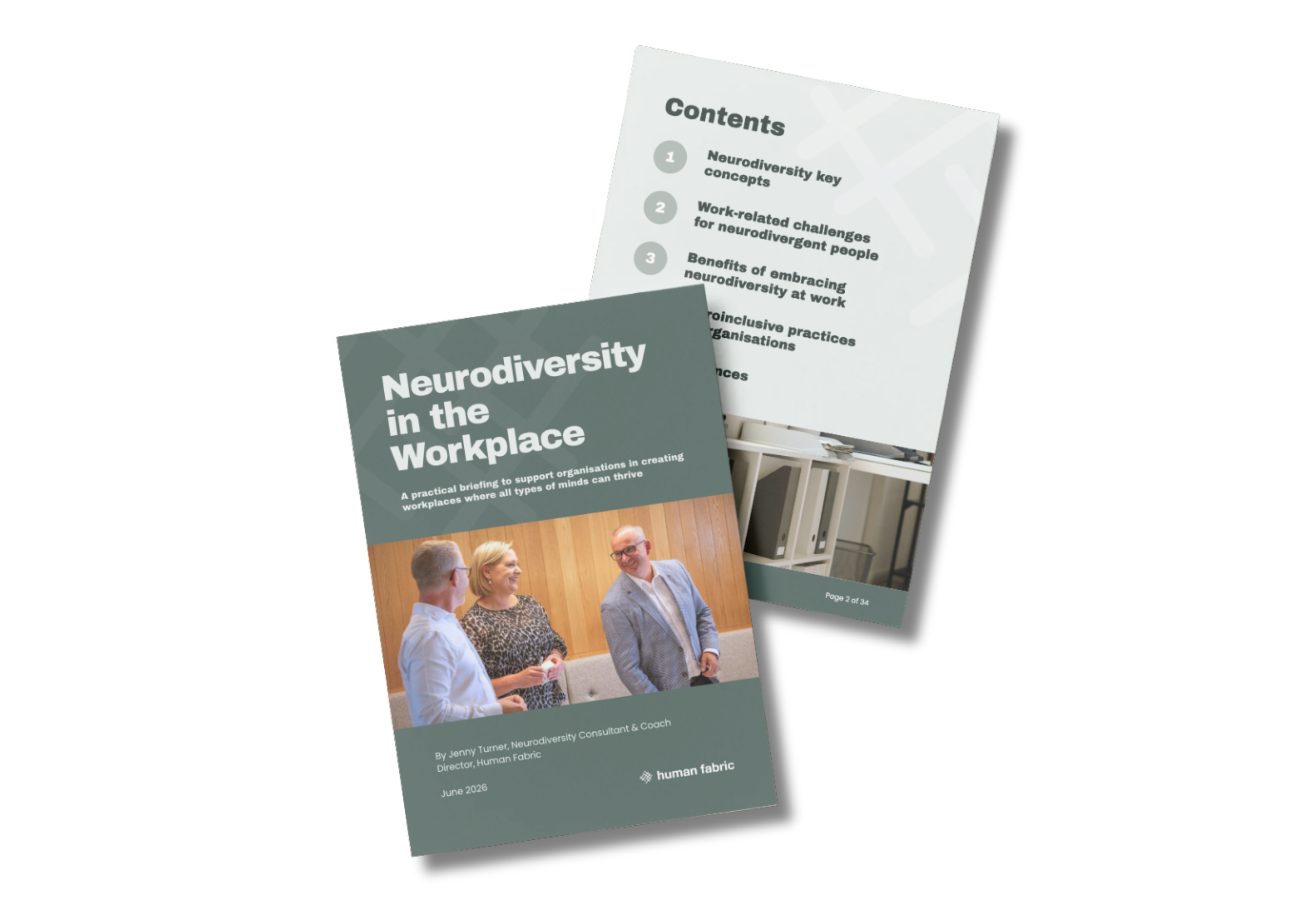
The Neurodiversity in the Workplace reference booklet

Resources and implementation support

  • 34-page leading-practice reference guide
  • Eight hours of consulting support each year
  • Quarterly progress check-ins
  • Accreditation community insights sessions
  • Annual progress review and updated priorities.


Maintaining accreditation

Accreditation is awarded for three years, subject to annual review and continued participation in the programme. At the end of the three-year period, a full reassessment is required to renew the accreditation.

What the programme creates for your organisation

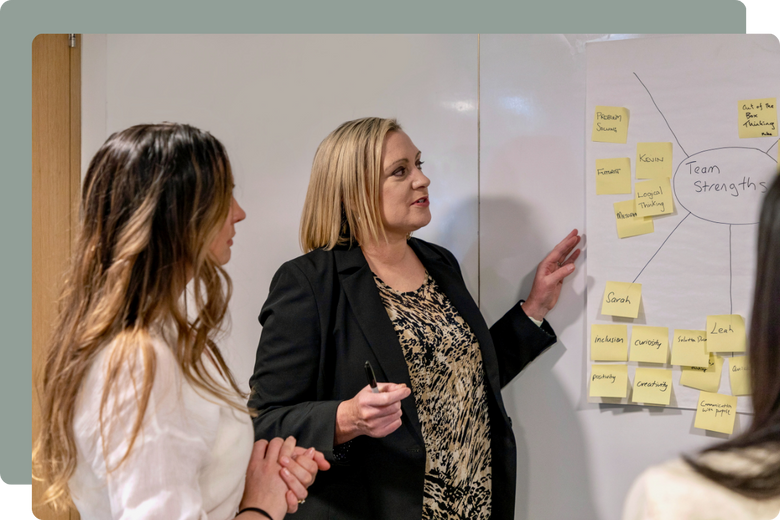
Jenny Turner talking to someone in front of a whiteboard and sticky notes

A clear, independent view of where you are now

Understand what is already working and where gaps, inconsistencies, or risks remain.

A focused strategy and plan

Translate findings into a realistic, prioritised roadmap with clear goals, success measures, and initiatives.

A more consistent employee experience

Identify where support and good practice still vary and strengthen the systems needed for greater consistency. 

Alignment on neuroinclusion across leaders and functions

Build shared understanding of neuroinclusion priorities across executives, People and Culture, DEI, employee networks, managers, communications, learning, technology, and workplace teams.

Meaningful employee and lived-experience insight

Bring employee perspectives into decision-making without placing responsibility for organisational change on individual employees or volunteers.

Recognition of existing progress

Acknowledge the work already completed and gain credible external recognition of your commitment and progress. 

Greater accountability and momentum

Give leaders a basis for monitoring progress, reviewing outcomes; and maintaining focus.

Better conditions for people and teams to thrive

Reduce avoidable barriers so more people can contribute from their strengths and perform sustainably. 


Is your organisation ready?

The Neurodiversity At Work accreditation programme is suitable for organisations that:

  • have begun investing in neurodiversity awareness or an employee resource group and want to understand what to do next
  • need a clearer and more coordinated plan for improvement
  • want an independent view of how current practices are experienced
  • want to assess current practices against a robust, evidence-informed framework
  • want to strengthen support, culture, and ways of working
  • are seeking greater consistency across leaders and teams
  • are prepared to involve the right people and act on the findings.

You do not need to have everything solved before beginning. Improvement is part of the programme! We can assess and guide those early on the journey, as well as organisations that are leading the way with neurodiversity at work.

"I developed the Neurodiversity at Work Accreditation to guide organisations on how to really benefit from neurodiversity in their workforce, and provide recognition of their progress in creating a more neuroinclusive employee experience - signaling that this is a great place to work!

- Jenny Turner, Founder of the Neurodiversity at Work Accreditation


Why Human Fabric?

Neuroinclusion in the workplace is our area of expertise. Human Fabric combines specialist workplace neurodiversity knowledge with deep experience in leadership, organisational development, strategy, change, and capability building.

Collaborative

We work with your people to understand the organisation’s context, culture, and employee experience.

Independent

We bring the external framework, professional judgement, and objectivity needed to determine the assessment and accreditation outcome.

Evidence-informed

Our work draws on research, international leading practice, organisational evidence, and lived experience.

Practical

Recommendations are designed to be realistic, useful, and achievable.

Balanced

We recognise existing strengths while being clear about inconsistency, risk, and areas for improvement.

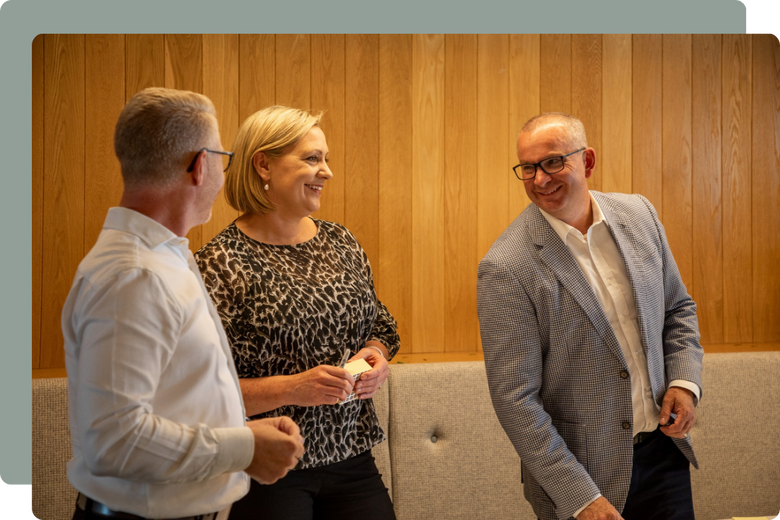
Jenny Turner and two others in a workshop

“Jenny was credible, efficient, organised and brilliant at keeping us on track without it ever feeling overwhelming.”

Dee Johnston, Head of People Experience, Engineering New Zealand


“We chose Human Fabric because they bring deep expertise in leadership, inclusion and neurodiversity, and have developed a holistic, structured framework to support organisations like Kiwibank to align with international best practice.”

Steve Jurkovich, Chief Executive Officer, Kiwibank


“Working with Human Fabric was great. I really appreciated the external perspective and knowledge, and the warm and inclusive way of working.”

Charlotte Ward, Chief People & Culture Officer, Kiwibank


Meet Jenny Turner

Founder and Principal Neurodiversity and Leadership Consultant

Jenny Turner is passionate about creating the conditions for optimal performance - for individuals, teams and organisations.

She brings more than 20 years’ experience in professional services, including senior leadership at Beca Group, where she led major change initiatives, built organisational capability and helped teams across the Asia-Pacific region work more effectively.

After being diagnosed with ADHD as an adult, and supporting her neurodivergent children, Jenny began to see workplace performance and inclusion through a new lens. She became curious about how different brains work, what people need to thrive and how much potential can be lost when organisations are designed around one preferred way of thinking, communicating and working.

Today, Jenny combines strategic thinking, organisational experience, specialist neurodiversity knowledge and lived experience to help organisations reduce friction, unlock strengths and create environments where more people can contribute to their full potential.

Jenny holds an MBA from the University of Auckland and has extensive experience in leadership, change, organisational improvement, facilitation and coaching.

Jenny Turner in a blazer smiling at the camera

“Neuroinclusion is not about lowering expectations. It is about removing avoidable barriers so more people can perform at their best.”

Jenny Turner, Founder of Human Fabric and creator of the Neurodiversity at Work Accreditation

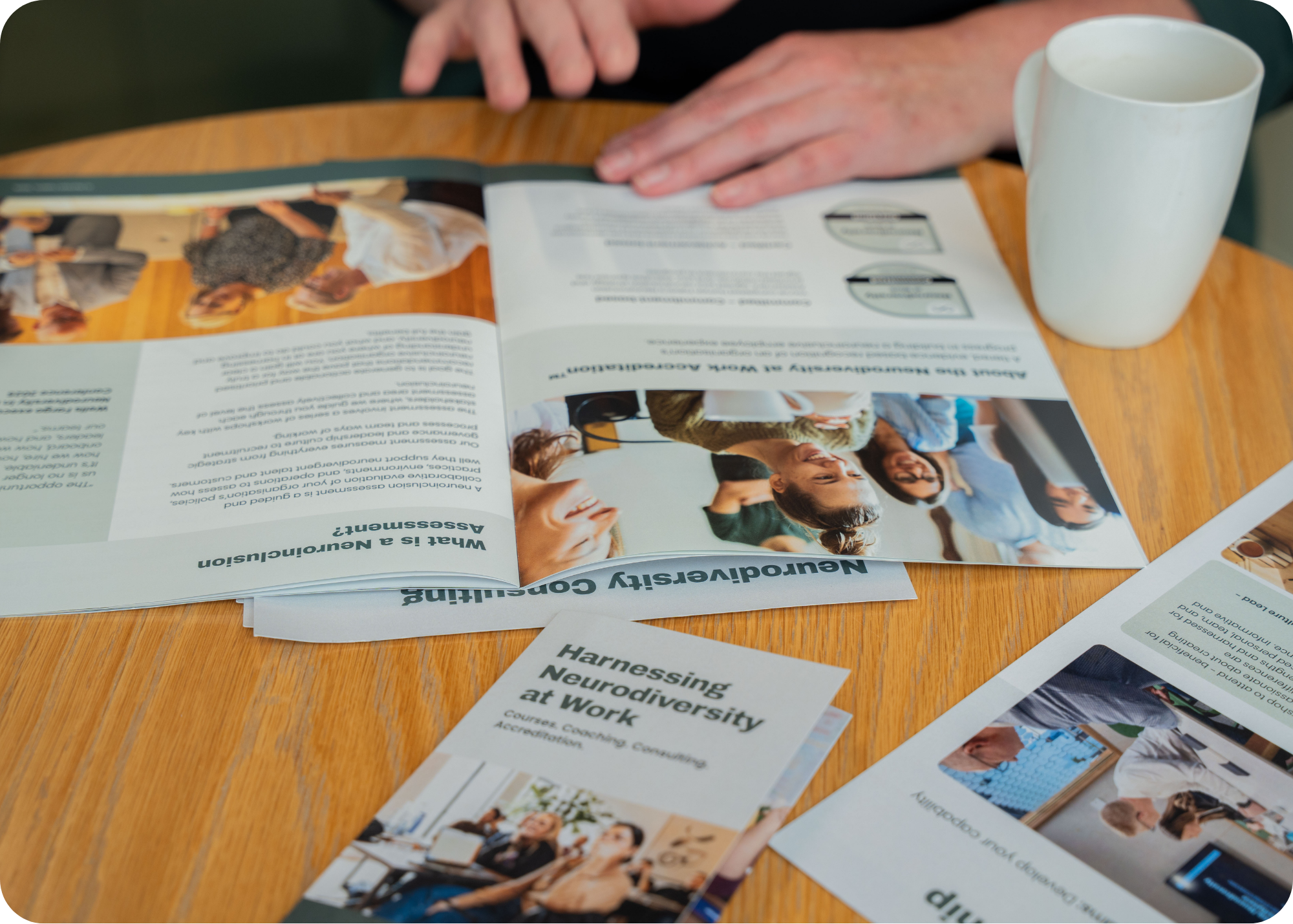
A photo of the neurodiversity at work accreditation brochure
Does our organisation need to be highly neuroinclusive already?

No. The accreditation recognises organisations at different stages. What matters is genuine commitment, leadership involvement and willingness to act on the findings.

Does the process require employees to disclose a diagnosis?

No. Employees do not need to have or disclose a diagnosis to participate.

Is the Neuroinclusion Survey required?

No. Human Fabric first reviews the employee data and insights already available and recommends whether additional surveying would add value.

How many workshops are involved?

The workshop programme is tailored to your organisation’s size, complexity, evidence and stakeholder groups. Sessions can be combined where appropriate.

Can workshops be held online?

Yes. Workshops can be held online, in person or through a blended approach.

Is the assessment independent if the workshops are collaborative?

Yes. Workshops help Human Fabric gather evidence and understand context. Human Fabric independently determines the ratings and accreditation outcome.

How long does the assessment take?

The initial process typically takes four to eight weeks.

How long is the accreditation valid?

Accreditation is awarded for three years, subject to annual review and continued participation in the programme.

Will our detailed findings be made public?

No. Your organisation’s name and accreditation level may be publicly listed, but detailed ratings, organisational evidence and employee insights remain confidential unless you choose to publish them.

Harness neurodiversity in your organisation

Understand what is already working.

Identify the barriers and inconsistencies that may be holding people back.

Develop a practical strategy to create a more neuroinclusive workplace.

Gain credible recognition for the progress your organisation has made and its commitment to continue improving.

“Having someone come in and say, ‘These are the things you’re doing really well, these are the things you can improve and these are the things you haven’t thought about,’ allows us to become a better-performing organisation.”

Richard Templer, Chief Executive Officer, Engineering New Zealand

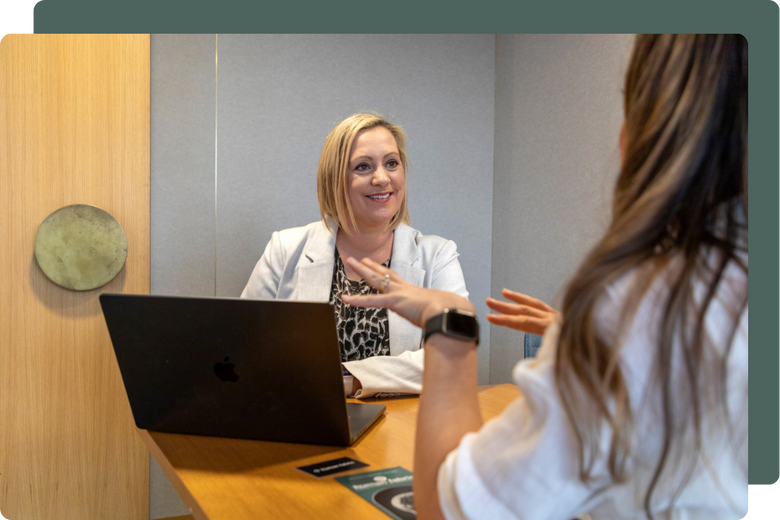
Jenny Turner listening to a client in a modern office while taking notes on a laptop